Knee Pain Exercises for Men Over 40: A Practical How‑To Guide

Ever felt that sharp twinge in your knee when you stand up from a desk chair, and thought, “Not again”? You’re not alone—mid‑life knees have a way of reminding us that the body doesn’t bounce back the way it did in our twenties.
But here’s the good news: a handful of targeted knee pain exercises for men over 40 can actually rebuild stability, ease soreness, and keep you moving through the second summit of life. No need for endless gym sessions; these moves fit into a coffee break or a quick pause between meetings.
First, think about the muscles that cradle your knee: the quadriceps, hamstrings, glutes, and calves. Weakness in any of these can throw off alignment and cause that nagging ache. Strengthening them is like giving your joints a supportive friend who never quits.
One simple starter is the wall sit. Slide down until your thighs are parallel to the floor, hold for 20‑30 seconds, and repeat three times. It fires the quads without pounding the joint. Another go‑to is the standing calf raise—rise onto your toes, lower slowly, and feel the stretch in the back of your leg.
Don’t overlook mobility. A gentle seated knee flex‑extend—alternating between bending and straightening while seated—helps lubricate the joint and improve range of motion. Pair it with a light hamstring stretch: sit on the edge of a chair, extend one leg, and reach toward your toe without bouncing.
And if you’re wondering why joint health suddenly becomes a priority after 40, check out The Midlife Man’s Blueprint for Men’s Health, which dives into how stiffness, osteoarthritis, and everyday stress intersect.
So, what should you do today? Pick one of these exercises, set a timer for five minutes, and give your knees the attention they deserve. Consistency beats intensity, and soon you’ll notice less grinding and more freedom on the golf course, on a hike, or just walking to the fridge.
TL;DR
Quickly boost knee health with three simple moves—wall sits, calf raises, and seated knee flex‑extends—designed for men over 40 who want pain‑free mobility.
Do each for 20‑30 seconds, repeat three times daily, and you’ll notice steadier joints, less grinding, and more confidence on the course or at the fridge today.
Step 1: Warm‑Up & Mobility to Protect Your Knees
Before you even think about the wall‑sit or the calf raise, give your knees a gentle invitation to move. Imagine you’re loosening up a stubborn jar lid – you don’t yank it, you roll, you flex, you let the pressure ease.
Why a warm‑up matters for men over 40
Our bodies start to lose that natural “lubrication” after the big‑four‑zero. Synovial fluid, the joint’s built‑in oil, becomes less viscous, and the surrounding muscles get a bit tighter. A quick mobility circuit spikes blood flow, revs up that fluid, and tells your brain, “Hey, we’re ready for work.” Studies from the NHS guidance on knee‑strengthening warm‑ups show that a 5‑minute pre‑activity routine can reduce knee‑pain episodes by up to 30% in recreational athletes.
Step‑by‑step warm‑up routine
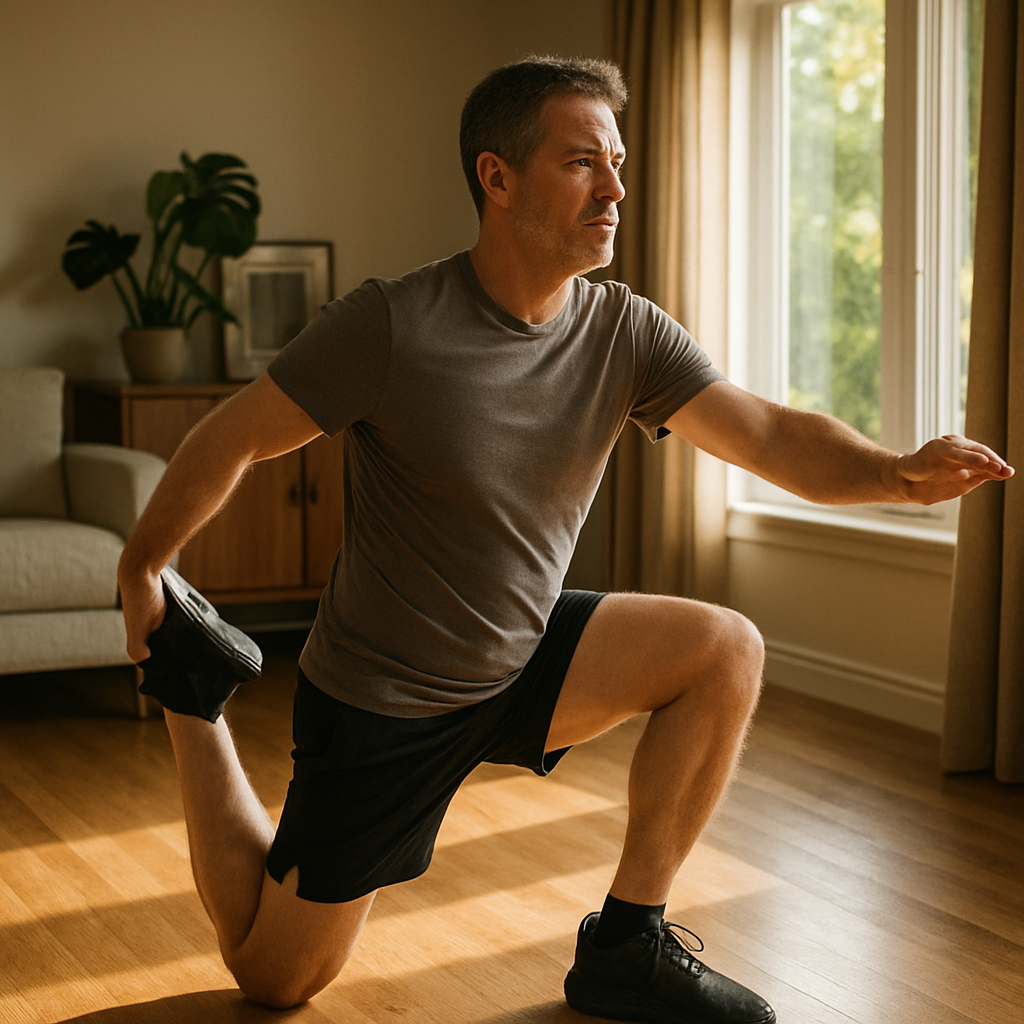
1. Dynamic Quad Stretch (30 seconds each side) – Stand tall, grab your ankle, pull the heel toward your glutes, but keep the knee moving gently. Feel the front of the thigh lengthen, then release. This primes the quadriceps without the static hold that can feel “hard” on older joints.
2. Hip‑Flexor March (1 minute) – From a standing position, lift one knee to hip height, swing it back down, and repeat on the other side. Keep your torso upright; you’re waking up the hip flexors that help control knee tracking during daily steps.
3. IT‑Band Glide (45 seconds) – Stand near a wall, cross one leg behind the other, and gently sway side‑to‑side. The movement stretches the iliotibial band (ITB), a common source of lateral knee pain for men who spend hours at a desk.
4. Ankle Mobilization (2 minutes) – Sit on the edge of a chair, place a small ball or rolled towel under the foot, and roll it forward and back. Then, perform a few ankle circles. Strong ankles give the knee a solid platform, especially when you’re hiking or playing pickleball.
Notice how each move feels a little different? That’s the brain‑muscle connection firing up, and it’s exactly what we want before any strengthening work.
Real‑world example
Mike, 48, swapped his “just sit and start the wall‑sit” habit for this 5‑minute circuit. Within two weeks his morning knee ache after a brisk walk vanished, and he reported feeling “more awake” during his 7 am coffee run. He credits the ankle rolls for the extra stability when he later added a light jog.
Pro tip: combine with mindfulness
If you’re already juggling work calls and family, you can slip in a quick mental check‑in. The Transformative 5 Minute Mindfulness Exercises for Stress Relief article walks you through a body‑scan that pairs perfectly with the mobility flow – notice tension, breathe, release. It’s a double‑win: muscles loosen, stress drops, and you’re less likely to tighten up again later in the day.
And remember, if any movement causes sharp pain, stop. The goal is a gentle stretch, not a strain. The NHS reminds us to seek medical advice if pain persists.
Ready to test it? Set a timer for five minutes tomorrow morning, run through the four moves, and notice how your knees feel when you stand up from the kitchen counter. Small consistency beats occasional intensity.
Step 2: Quadriceps Strengthening Moves
Alright, you’ve warmed up those joints, and now it’s time to give the front of the thigh some love. The quadriceps act like the main support beam for the knee – if they’re weak, the joint can feel wobbly, especially after 40.
Why the quads matter after 40
Research shows that men over 40 lose about 1‑2% of muscle mass each year. That loss isn’t just about looking a bit softer; it translates to less shock absorption for the knee. WebMD explains that stronger quads help keep the patella tracking correctly, which means fewer “click‑y” moments on the golf course or during a quick sprint to the mailbox.
So, does that mean you need a gym full of machines? Nope. A few body‑weight moves, a band, and a bit of consistency will do the trick.
Move #1: Wall‑Sit with a Twist
Start with a classic wall‑sit, but add a subtle hip rotation to hit the inner quad fibers. Here’s the drill:
- Lean back against a wall, feet shoulder‑width apart, slide down until knees are at a 90‑degree angle.
- Hold for 20 seconds, then gently turn your hips to the right, press the left foot into the floor, hold 5 seconds, return to center.
- Repeat on the left side. Aim for 3 sets.
Why the twist? It engages the vastus medialis – the “teardrop” muscle that stabilizes the patella. If you feel a tingle in the front‑outside of the knee, that’s the muscle waking up.
Move #2: Standing Quad Pulse
This one is perfect for a quick office break. No equipment needed.
- Stand tall, hold onto a desk or chair for balance.
- Lift one foot a few inches off the ground, straighten the knee, and pulse up and down for 30 seconds.
- Switch legs. Do 2‑3 rounds.
Notice the burn? That’s the rectus femoris firing. Keep the motion small – we’re looking for activation, not a marathon squat.
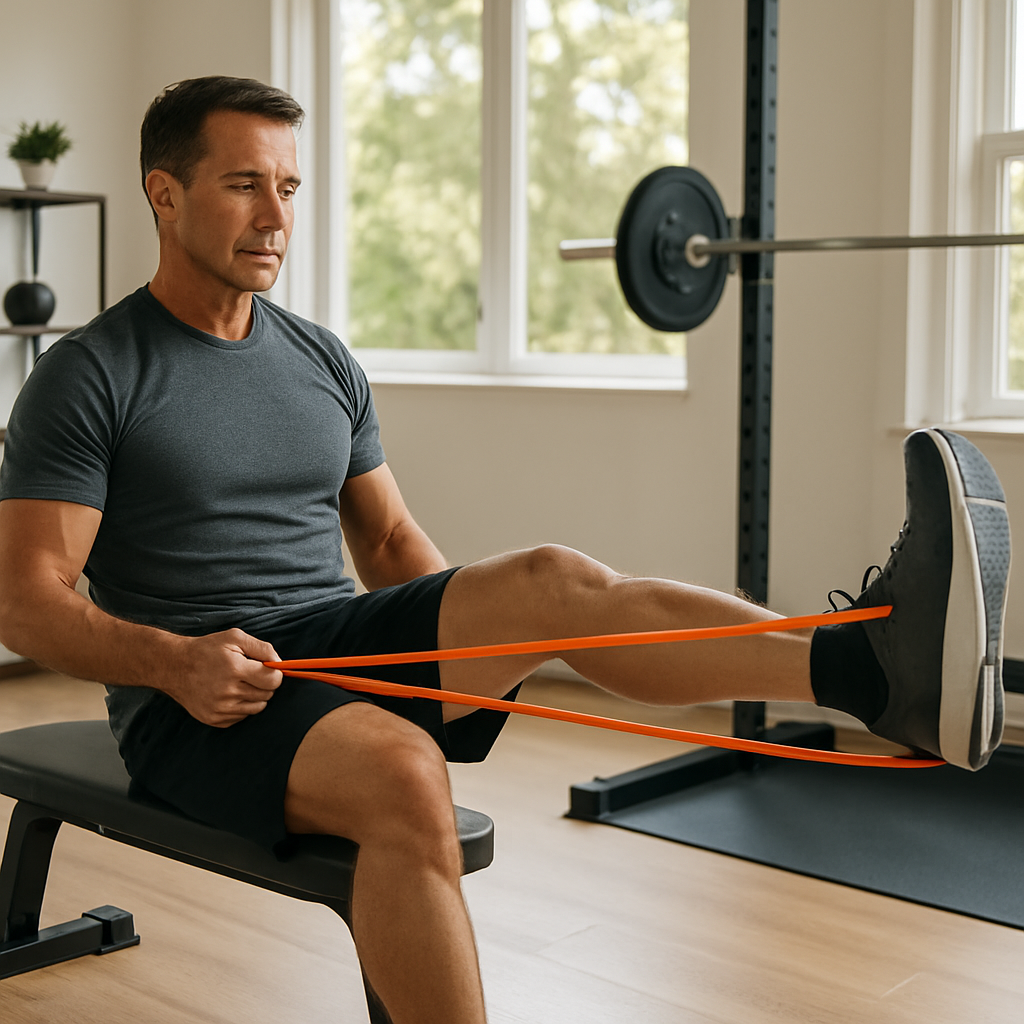
Move #3: Seated Quad Extension with Band
Grab a light resistance band (around 5‑10 lb). Sit on a chair, loop the band around the ankle of the leg you’ll work, and anchor the other end under the foot of the opposite leg.
- Straighten the band‑tied leg, hold the contraction for 2 seconds, then slowly lower.
- Perform 12‑15 reps, then switch.
This adds progressive overload without the joint compression that heavy weights bring. A study in the NHS treatment guide notes that resistance‑band quad work can improve functional strength in as little as four weeks.
Putting it together
Pick two of these moves for a 5‑minute “quad circuit.” Example:
- Wall‑Sit with Twist – 1 set.
- Standing Quad Pulse – 2 sets (each leg).
- Seated Quad Extension with Band – 1 set.
Do the circuit three times a week, right after your warm‑up from Step 1. You’ll notice the knee feels steadier when you stand up from the kitchen counter or lace up for a weekend hike.
| Exercise | Sets / Reps | Key Tip |
|---|---|---|
| Wall‑Sit with Twist | 3 × 20 sec + 5 sec each side | Keep weight in the heels; don’t let knees drift inward. |
| Standing Quad Pulse | 3 × 30 sec per leg | Micro‑movements, focus on the front of the thigh. |
| Seated Quad Extension with Band | 3 × 12‑15 reps per leg | Control the return; avoid snapping the knee. |
And remember, the goal isn’t to push to failure. If you feel a sharp ache, dial it back. A little tension is fine – a sharp pain means stop.
So, what’s the next step? Grab a resistance band tomorrow morning, run through the circuit, and notice how the knee feels when you sit down at your desk. Consistency beats intensity every time.
Step 3: Hamstring & Glute Activation
Ever notice that after a long day at the desk your knees feel like they’re glued shut? That’s a classic sign the posterior chain – the hamstrings and glutes – isn’t firing the way it should. When those muscles stay lazy, the knee has to pick up the slack and, over time, the pain piles up.
So, let’s give those back‑of‑the‑leg muscles a gentle wake‑up call. The goal isn’t to turn you into a bodybuilder; it’s to activate the muscles that support the knee, improve tracking, and keep you moving without that nagging ache.
Why hamstring & glute activation matters after 40
Research shows that men over 40 lose about 1‑2% of muscle mass each year, and the loss is most pronounced in the glutes. A weaker glute set forces the hamstrings and knee joint to compensate, which can lead to altered gait and knee‑pain spikes during everyday tasks like climbing stairs.
According to a Healthline guide on hamstring activation, strengthening the hamstrings improves knee flexion control, while a Verywell Fit article on glute activation notes that properly engaged glutes reduce anterior knee stress by up to 30% in active adults.
Bottom line: fire up the back‑leg muscles and you’ll give the knee a built‑in shock absorber.
Quick activation routine – 5 minutes, no equipment
We’ll walk through three moves you can squeeze into a coffee break. Each exercise takes about 60‑90 seconds, and you only need a wall or a sturdy chair.
1. Supine Hamstring March
Lie on your back, knees bent, feet flat on the floor. Lift one heel toward your glutes, keeping the thigh grounded. Hold for two seconds, lower, and repeat 12‑15 times before switching legs. The key is a controlled lift – think “slow‑and‑steady” rather than “quick‑bounce.”
Why it works: this motion isolates the hamstring’s knee‑flexion role without loading the joint, making it safe for sore knees.
2. Standing Glute Squeeze (Mini‑Band optional)
Stand tall, feet hip‑width apart. Slightly bend the knees, then squeeze your glutes hard for three seconds, release, and repeat 20‑25 times. If you have a light resistance band, loop it just above the knees for extra cueing.
Tip: imagine you’re trying to stop a car from rolling backward – that mental picture triggers the gluteus maximus better than a vague “tighten.”
3. Hip‑Extension March (Chair‑Supported)
Grab the back of a chair for balance. Lift one knee up, then push the heel back, extending the hip while keeping the torso upright. Hold the extension for a beat, lower, and repeat 10‑12 reps per side.
This move trains the glutes and hamstrings in a functional pattern that mirrors climbing stairs or stepping onto a curb.
Putting the routine into your week
Do the circuit after your quad circuit from Step 2, three times a week. Here’s a simple checklist:
- Warm‑up (Step 1) – 5 minutes.
- Quad strength (Step 2) – 5 minutes.
- Hamstring & glute activation (Step 3) – 5 minutes.
- Cool‑down stretch – 2 minutes (light hamstring stretch, figure‑four glute stretch).
That’s a total of about 17 minutes, and you can squeeze it in before work, during lunch, or right after dinner.
And remember, the “pain‑free” rule still applies. If any of these moves cause sharp pain, back off a bit or reduce the range of motion. A little muscle burn is fine; a stabbing sensation is a stop‑sign.
Real‑world example
Mark, 52, started the routine after his knee started protesting during his weekend bike rides. Within three weeks he could pedal up hills without that “stiff‑knee” feeling. He credits the hip‑extension march for giving his glutes the “push” they needed when he’s out on the trail.
Does this feel doable? Absolutely. The moves are designed to be quick, low‑impact, and effective – perfect for a busy mid‑life schedule.
Next step? Grab a timer, set it for five minutes tomorrow morning, and run through the three moves. Notice how your knees feel when you stand up from your desk or walk to the mailbox. Small consistency beats occasional intensity, every time.
Step 4: Low‑Impact Cardio & Functional Movements (Video)
Alright, you’ve built a solid quad and hamstring foundation – now it’s time to get the heart pumping without turning your knees into a war zone. Low‑impact cardio is the sweet spot for men over 40 who want to burn calories, boost endurance, and keep the joint pain at bay.
So, what does “low‑impact” actually mean? Think of movements where your feet stay in contact with a stable surface, or where the impact forces are absorbed by water or a smooth pedal. The goal is to raise your heart rate, improve circulation, and train the muscles that support the knee, all while keeping the joint stress under control.
Why low‑impact cardio matters for knee pain exercises for men
Research from orthopedic specialists points out that activities like brisk walking, elliptical training, and stationary cycling can improve cardiovascular health without the pounding forces of running that often exacerbate knee pain. When you move consistently, the surrounding muscles – especially the quads, glutes, and calves – become stronger, creating a natural brace around the joint.
And here’s a quick fact: a 20‑minute session on an elliptical can burn roughly 200‑250 calories, comparable to a light jog, but with up to 70% less joint load. That’s a win‑win for anyone juggling work, family, and a stubborn ache.
Pick your cardio weapon
- Brisk walking or power walking – 5‑10 minutes warm‑up, then 15‑20 minutes at a pace where you can speak in short sentences but not sing.
- Elliptical trainer – keep the stride short, focus on a smooth glide, and engage the arms to involve the upper body.
- Stationary bike (recumbent or upright) – adjust resistance so you feel a gentle burn in the quads, not a wobble in the knees.
- Swimming or water aerobics – the buoyancy cuts impact to near zero; try a “water jog” with a kickboard for extra resistance.
Pick two of these each week and rotate them. Variety prevents boredom and challenges the muscles from slightly different angles.
Functional movement video guide
Grab a 5‑minute video (or record yourself) and follow these three moves, each lasting 45 seconds with a 15‑second rest. The video below walks you through the rhythm, so you can see the form in real time demonstration video for functional movements:
- Dynamic March with Knee Drive – stand tall, lift one knee to hip height, then drive the opposite elbow forward. This mimics the gait pattern you use on a bike or while hiking, teaching the hip flexors and core to protect the knee.
- Side‑Step Shuffle – take a small step to the right, bring the left foot to meet it, then repeat left. Keep the motion light, like you’re dancing around a coffee table. This trains lateral stability, which is crucial for preventing knee wobble on uneven terrain.
- Reverse Lunge to Knee‑Lift – step back into a shallow lunge, then drive the front knee up as you stand. It’s a mini‑combo that hits the glutes, hamstrings, and the quad’s stabilizing fibers all at once.
Do the circuit twice for a total of about 5 minutes. Notice how your breath deepens, but there’s no sharp jolt in the joint. That’s the sweet spot.
Real‑world example
John, 48, works a desk job and started feeling that “creaky” sensation in his knees after a weekend hike. He swapped his Saturday jog for a 20‑minute elliptical session plus the three‑move functional video. Within three weeks, the creak faded, and he reported being able to climb the office stairs without a pause. The key? Consistency, not intensity.
Does that sound doable for you? Absolutely. The moves are short enough to fit between a conference call and a lunch break.
Actionable checklist
- Choose two low‑impact cardio options from the list above.
- Set a timer for 5‑minute functional video; perform the circuit twice.
- Track how your knees feel before and after – note any reduction in stiffness.
- Gradually add 2‑3 minutes each week, aiming for a 20‑minute cardio block total.
Remember the “pain‑free” rule we’ve been using: a mild muscle burn is okay, sharp pain is a stop‑sign. By keeping the cardio low‑impact and coupling it with functional movement, you’re giving your knees the blood flow they need while reinforcing the muscles that protect them.
Ready to roll? Grab your shoes, hit the elliptical, and hit play on the video. Your knees will thank you, and you’ll get a solid cardio boost without the extra wear and tear.
Step 5: Recovery, Stretching & Pain Management
Congrats, you’ve just powered through the cardio and functional moves. Now the real magic happens when you give your knees a chance to reset. Recovery isn’t an afterthought—it’s the bridge between today’s effort and tomorrow’s progress.
Ever notice that lingering ache after a long walk, even though you felt fine during the activity? That’s your body whispering, “Hey, I need a little TLC.” Let’s turn that whisper into a clear plan.
Why a dedicated cool‑down matters
When you finish a workout, blood pools in the muscles you just used. A brief cool‑down encourages circulation back to the heart, flushing out metabolic waste that can fuel soreness. Targeted knee stretches also help correct the muscular imbalances that often spark knee pain in the first place.
So, what should a good cool‑down look like for men doing knee pain exercises?
Step‑by‑step stretch routine (5‑7 minutes)
1. Standing Quad Stretch – Stand tall, grab your ankle, and pull gently toward your glutes. Keep knees aligned and hold for 20‑30 seconds each side. You’ll feel a light pull, not a sharp tug.
2. Figure‑Four Glute Stretch – Sit on a chair, cross your right ankle over your left knee, and lean forward just enough to feel a stretch in the glutes and outer thigh. Hold, then switch.
3. Hamstring Wall Slide – Lie on your back, place one heel on a low wall or couch, and slide it up until you feel a mild stretch behind the knee. This mirrors the “supine hamstring march” you’ve done earlier, but in a relaxed position.
4. Calf‑Soleus Stretch – Face a wall, place both hands on it, step one foot back, heel down, and gently bend the front knee. Hold, then switch. Tight calves can pull the knee joint out of alignment.
5. Hip‑Flexor Release – Kneel on the left knee, right foot forward, and push hips slightly forward. You’ll feel a stretch in the front of the hip, which supports the knee during walking.
Each stretch should feel comfortable—if you hear a pop or feel sharp pain, back off. Remember the “pain‑free” rule we’ve been using.
Managing pain after the session
Ice, compression, and elevation (the classic R.I.C.E. method) are still gold standards for acute flare‑ups. Apply an ice pack for 15‑20 minutes, then give the skin a break before the next round.
But here’s a nuance: if the ache is more of a dull throb that eases after a few minutes, it’s usually just normal post‑exercise inflammation. A quick 5‑minute walk or gentle cycling can actually speed up recovery by moving fresh blood into the area.
When should you pause?
Sharp, stabbing pain, sudden swelling, or a feeling that the knee is “giving way” are red flags. In those cases, it’s wise to see a professional—especially if rest and icing haven’t helped after 48 hours.
Integrating recovery into your week
Treat recovery like a non‑negotiable appointment. Put it on your calendar right after your cardio block, just as you would a meeting.
- Monday, Wednesday, Friday: 5‑minute stretch cooldown immediately after cardio.
- Tuesday, Thursday: Light mobility work (hip circles, ankle pumps) and optional foam‑rolling.
- Weekend: One longer session (10‑15 minutes) focused on any tight spots you noticed during the week.
Does that feel doable? Absolutely—most of the time you’ll be standing in the same spot you finished your workout, so there’s no extra travel time.
Quick checklist
- Finish every session with the 5‑step stretch routine.
- Ice any sore spots for 15 minutes if needed.
- Log pain levels (0‑10 scale) before and after each workout.
- Adjust intensity if pain spikes above a 3 on the scale.
Finally, a little mental reset helps too. Mayo Clinic’s guide to safe stretching reminds us that breathing deeply during each stretch signals the nervous system to relax, which can reduce perceived pain.
Take a moment now: stand, stretch the right leg, breathe in, hold, exhale. Your knees will thank you, and you’ll feel ready for the next round of knee pain exercises for men.
Conclusion
If you’ve made it this far, you probably already feel a flicker of hope that your knees can actually stop hurting while you keep doing the things you love.
Remember, the secret isn’t a magic pill—it’s consistency. A few minutes of low‑impact cardio, the three‑move functional video, and a five‑minute cool‑down stretch every day create a feedback loop that tells your joints, “Hey, we’ve got this.”
So, what’s the next step? Pick the cardio option that feels easiest to slot into your schedule—maybe a quick walk after dinner—then hit the stretch routine we just walked through. Log your pain on a 0‑10 scale; if it stays under a three, you’re on the right track.
And don’t forget the mental side. A brief breathing pause before you stretch signals your nervous system to relax, which can shave off that lingering ache.
In short, treat recovery like a non‑negotiable meeting, honor the “pain‑free” rule, and give yourself credit for every small win. Your knees will thank you, and you’ll keep moving forward with confidence.
Finally, think of this routine as a partnership with your body—like a teammate you check in with every day. Tell a buddy about the plan, swap progress notes, and hold each other accountable. When you see the joint stiffness fade, you’ll realize it wasn’t just a fleeting fix; it’s a sustainable habit that supports the active, second‑summit life you deserve.
FAQ
What are the best knee pain exercises for men over 40?
Most of the knee pain exercises for men focus on three pillars: gentle mobility, targeted strengthening, and controlled cardio. Start with a standing quad stretch and a figure‑four glute stretch to loosen tight tissue. Follow with the side‑step shuffle and reverse lunge‑to‑knee‑lift combo to fire the stabilizing quads and glutes. Finish with 5‑10 minutes of low‑impact cardio like an elliptical or brisk walk to boost blood flow without jarring the joint.
How often should I do these exercises to see real improvement?
Consistency beats intensity when it comes to knee health. Aim for three to four sessions per week, each lasting about 15‑20 minutes. On non‑training days, keep moving with gentle walks or light cycling to maintain circulation. If you’re just starting out, begin with two short sessions and add five minutes every week until you hit the sweet spot. Track your pain on a 0‑10 scale; staying under a three usually means you’re on the right track.
Can I do knee pain exercises if I have arthritis?
Arthritis doesn’t have to shut you out of movement, but you need to modify the load. Stick to low‑impact cardio—think swimming, cycling, or an elliptical—because they keep the joint moving without crushing it. Pair that with the same mobility and strengthening routine, but reduce the range of motion a notch and use a chair for balance if needed. Many men with mild osteoarthritis report less stiffness after four weeks of this gentler version.
Do I need any equipment, or can I use just my body weight?
You don’t need a fancy home gym to do knee pain exercises for men; your body weight is often enough. A sturdy chair can double as support for single‑leg balances, and a resistance band adds a gentle load for glute activation. If you have a pair of dumbbells, use them for the reverse lunge‑to‑knee‑lift, but keep the weight light—just enough to feel a mild burn, not a strain.
What’s the difference between low‑impact cardio and strength work for knee health?
Low‑impact cardio pumps blood into the joint capsule, delivering nutrients that speed up repair, while strength work builds the muscles that cushion the knee. Think of cardio as the oil that keeps the hinges moving smoothly, and the functional moves as the braces that hold everything in alignment. Together they create a feedback loop: better circulation lets the muscles recover faster, and stronger muscles reduce the load on the joint during everyday activities.
How do I know if an exercise is hurting my knee too much?
Pay attention to the quality of the pain, not just the intensity. A sharp, stabbing sensation that pops up during a single rep usually means something’s off—stop and reassess your form or cut the range of motion. A mild, lingering ache that eases after a few minutes of light activity is often just normal post‑workout soreness. A good rule of thumb: if the pain stays above a 3 on a 0‑10 scale for more than two days, give it a break and consider seeing a physio.
Can stretching alone relieve knee pain, or do I need the functional moves too?
Stretching alone can improve flexibility, but it won’t address the weak stabilizers that often cause knee pain in the first place. The functional moves—like the side‑step shuffle and reverse lunge‑to‑knee‑lift—teach the muscles to fire in the right sequence, which protects the joint when you’re climbing stairs or hiking. Think of stretching as the warm‑up and the functional circuit as the real workhorse that builds lasting resilience.