How to Build Muscle After 40: Science-Based Strategies That Work With Your Slower Metabolism

Estrogen Men Over 40
Table of Contents
Reading time: 12 minutes

If you’re over 40 and feel like your body is working against your muscle-building goals, you’re not imagining things. Research published in the Journal of the American Medical Association shows men lose 3-8% of muscle mass per decade after 30, while metabolic rate drops 1-3% annually. That’s not just aging—it’s your physiology fundamentally changing how it processes nutrients, recovers from exercise, and builds new tissue.
But here’s what most fitness advice gets wrong: it treats your 40+ body like a broken 25-year-old body that just needs to “work harder.” The reality is your physiology has evolved, and the most effective muscle-building strategies work with these changes, not against them.
After reviewing dozens of studies and speaking with experts who specialize in training men over 40, we’ve identified the evidence-based protocols that deliver real results. This isn’t about accepting limitations—it’s about optimizing for your current reality to achieve better outcomes than you thought possible.
Understanding the 40+ Muscle-Building Challenge
The Metabolic Reality: What Actually Changes After 40



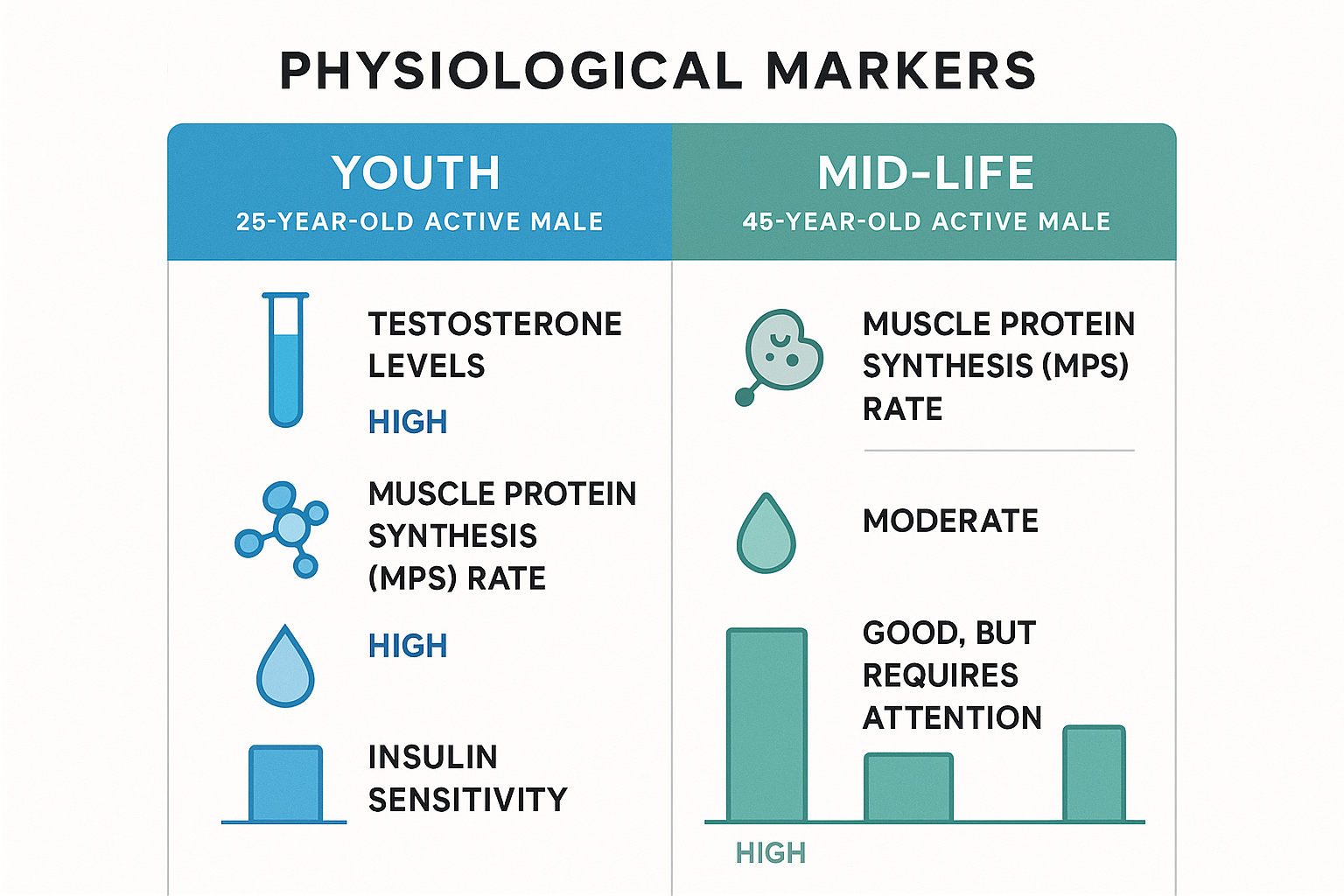
Your metabolism doesn’t just slow down—it fundamentally shifts how your body processes energy. According to research from the Mayo Clinic Proceedings, three critical changes occur simultaneously:
Muscle Protein Synthesis Decline: Your body becomes less efficient at converting dietary protein into new muscle tissue. What used to require 20 grams of protein per meal now needs 25-30 grams to trigger the same anabolic response.
Insulin Sensitivity Reduction: Your muscles become less responsive to insulin, making nutrient timing more critical. The post-workout “anabolic window” becomes both shorter and more important for men over 40.
Recovery Capacity Changes: Inflammatory markers stay elevated longer after exercise, extending the time needed between intense training sessions from 24-48 hours to 48-72 hours.
Expert Insight: “The biggest mistake I see with men over 40 is trying to out-work their physiology,” says Dr. Stuart Phillips, a protein metabolism researcher at McMaster University. “Success comes from strategic adaptation, not brute force.”
Hormonal Shifts That Impact Muscle Growth
Latest Research Highlights:
✅ Critical Context: Men’s testosterone levels have plummeted by over 40% in the last two decades 7 Essential Testosterone Secrets for Ultimate Performance in 2025 – ByTyrWood: Men’s Performance Physique Optimization, making this topic more urgent than ever
✅ Weight Management Impact: Harvard Medical School research shows maintaining healthy weight can boost testosterone production up to 30% Lifestyle strategies to help prevent natural age-related decline in testosterone – Harvard Health
✅ AI-Driven Personalization: Cutting-edge AI-driven diagnostics now analyze genetic, metabolic, and lifestyle factors to create customized treatment plans The Latest Updates in Testosterone Therapy for 2025 » Regenerative Medical Therapy
✅ Exercise Protocol Evidence: Combination of aerobic and resistance training has been found to increase testosterone production while preventing the most common diseases men are likely to die from Improving Low Testosterone Naturally – Whole Health Library
✅ Supplement Reality Check: Comprehensive analysis of 50 testosterone-boosting supplements found that only 24.8% had data showing actual increases in testosterone levels ‘Testosterone Boosting’ Supplements Composition and …
✅ Dietary Impact: Dietary manipulation has profound effects on circulating testosterone concentrations Manipulation of Dietary Intake on Changes in Circulating Testosterone Concentrations – PMC
The hormonal landscape changes dramatically after 40, creating both challenges and opportunities:
Testosterone Decline: Natural testosterone production drops 1-2% annually after age 30, accelerating after 40. However, resistance training can slow this decline significantly.
Growth Hormone Reduction: Growth hormone release during sleep decreases by up to 50% between ages 20 and 40, making sleep quality even more critical for recovery and muscle growth.
Cortisol Sensitivity Increase: Chronic stress becomes more damaging to muscle-building efforts, as cortisol levels stay elevated longer and interfere with recovery processes.
Why Traditional Advice Often Fails for Men Over 40
Most muscle-building advice originates from studies on college-aged men with optimal hormones, unlimited recovery capacity, and minimal life stress. This creates three fundamental mismatches:
- Volume Assumptions: Programs designed for 22-year-olds often prescribe training volumes that prevent adequate recovery for 45-year-olds
- Nutrition Timing: Generic meal timing ignores the altered protein synthesis rates in aging muscle
- Recovery Protocols: Traditional rest periods don’t account for extended inflammatory responses
The Science-Based Foundation for 40+ Muscle Building

Protein Requirements: The New Research on Aging Athletes
Recent research from Sports Medicine Journal reveals that men over 40 need significantly more protein than previously thought—not just for muscle building, but for muscle preservation during the natural aging process.
Updated Protein Targets:
- Sedentary men 40+: 0.8-1.0g per pound of body weight
- Active men 40+: 1.0-1.2g per pound of body weight
- Men in caloric deficit: 1.2-1.4g per pound of body weight
Critical Distribution Pattern: Instead of spreading protein evenly, research shows superior results from “protein clustering”—consuming larger amounts (30-40g) in fewer meals to maximize the anabolic response.
Quick Action: Calculate your daily protein target using your current body weight × 1.1. Divide this into 3-4 meals with at least 25g protein each.
Resistance Training Adaptations for Changing Recovery Capacity
The National Institute on Aging’s latest exercise guidelines recognize that men over 40 need fundamentally different training approaches:
Frequency Optimization: Instead of training muscle groups twice weekly, research supports a “high-frequency, moderate-volume” approach—training each muscle group 2-3 times per week with lower daily volumes.
Intensity Distribution: The classic “lift heavy or go home” mentality becomes counterproductive. Optimal results come from periodizing intensity: 60% of training at moderate intensity (6-10 reps), 30% at higher intensity (3-6 reps), and 10% at muscular endurance ranges (12-15 reps).
Movement Quality Priority: Joint health becomes the limiting factor for long-term progress. Every workout should include movement preparation and post-training mobility work.
Metabolic Flexibility: Working With Your Slower Engine
Your metabolism hasn’t broken—it’s become more discriminating. Harvard Health Publishing research shows that men over 40 who adapt their approach to work with metabolic changes see better body composition results than those fighting against them.
Strategic Metabolic Enhancement:
- Morning fasted training: Enhances fat oxidation capacity when performed 2-3 times weekly
- Post-workout nutrition timing: Becomes more critical as the anabolic window narrows
- Daily activity emphasis: Non-exercise activity thermogenesis (NEAT) becomes more important for overall metabolic health
Strategic Nutrition for Muscle Growth with Slower Metabolism
Protein Timing and Distribution Throughout the Day
The research is clear: when you eat protein matters as much as how much you eat. A 2023 study in the American Journal of Clinical Nutrition found that men over 40 who optimized protein timing gained 40% more muscle mass than those who simply hit daily targets.
Optimal Protein Distribution Schedule:
Upon Waking: 25-30g protein within 30 minutes
- Counteracts overnight muscle protein breakdown
- Kickstarts metabolic processes
- Example: Greek yogurt with protein powder
Pre-Workout (if training fasted): 10-15g easily digestible protein
- Branch-chain amino acids or whey protein
- Prevents muscle breakdown during training
Post-Workout: 30-40g complete protein within 60 minutes
- Include 25g+ leucine-rich protein source
- Add simple carbohydrates (banana, rice) for enhanced uptake
Before Bed: 20-25g casein protein or Greek yogurt
- Provides sustained amino acid release during sleep
- Supports overnight recovery processes
Carbohydrate Cycling for Body Composition
Men over 40 benefit from strategic carbohydrate manipulation rather than elimination. Research from the Journal of the International Society of Sports Nutrition shows that carbohydrate cycling can improve insulin sensitivity while supporting muscle growth.
3-Day Cycling Protocol:
- High Days (2x/week): 1.5-2g carbs per pound on heavy training days
- Moderate Days (3x/week): 0.75-1g carbs per pound on moderate training days
- Low Days (2x/week): 0.25-0.5g carbs per pound on rest or light activity days
Pro Tip: Schedule high-carb days around your most demanding workouts (leg day, deadlift sessions) to optimize performance and recovery.
Essential Fats for Hormone Production and Recovery
Dietary fat becomes more critical after 40 due to its role in hormone production and inflammation management. The American Council on Exercise recommends 25-35% of total calories from fat, with specific attention to omega-3 fatty acids.
Daily Fat Targets:
- Total fat: 0.3-0.5g per pound of body weight
- Omega-3s: 2-3g daily (fish oil, fatty fish, walnuts)
- Monounsaturated fats: Olive oil, avocados, nuts for testosterone support
Meal Timing Strategies That Maximize Protein Synthesis
The key insight for men over 40: meal timing becomes more important as metabolic flexibility decreases. Strategic nutrient timing can partially offset age-related changes in protein synthesis.
4-Meal Protocol for Optimal Results:
Meal 1 (7 AM): Protein + complex carbs + fats
- 30g protein, 40g carbs, 15g fats
- Example: Omelette with vegetables and toast
Meal 2 (12 PM): Balanced macro approach
- 35g protein, 45g carbs, 20g fats
- Example: Chicken salad with quinoa and olive oil dressing
Meal 3 (Post-Workout): Protein + simple carbs, minimal fat
- 40g protein, 50g carbs, 5g fats
- Example: Protein shake with banana and rice
Meal 4 (7 PM): Protein + vegetables + healthy fats
- 30g protein, 20g carbs, 25g fats
- Example: Salmon with roasted vegetables and avocado
Optimized Training Protocols for the 40+ Physiology
Compound Movement Progressions for Maximum Efficiency
Time becomes your most valuable resource after 40. Research consistently shows that compound movements deliver superior muscle-building results per time invested compared to isolation exercises.
The Big 6 Movement Patterns (prioritize these):
1. Squat Progression
- Beginner: Goblet squats → Box squats
- Intermediate: Back squats → Front squats
- Advanced: Pause squats → Single-leg variations
2. Deadlift Progression
- Beginner: Trap bar deadlifts → Romanian deadlifts
- Intermediate: Conventional deadlifts → Sumo deadlifts
- Advanced: Deficit deadlifts → Single-leg deadlifts
3. Push Progression
- Beginner: Push-ups → Dumbbell bench press
- Intermediate: Barbell bench press → Incline press
- Advanced: Weighted push-ups → Single-arm pressing
4. Pull Progression
- Beginner: Assisted pull-ups → Bent-over rows
- Intermediate: Pull-ups → Weighted pull-ups
- Advanced: Muscle-ups → Single-arm rows
5. Carry Progression
- Beginner: Farmer’s walks → Suitcase carries
- Intermediate: Overhead carries → Mixed carries
- Advanced: Uneven loads → Extended distances
6. Rotation/Core Integration
- Beginner: Planks → Dead bugs
- Intermediate: Pallof press → Turkish get-ups
- Advanced: Loaded carries → Rotational power movements
Common Mistake: Trying to progress weight too quickly. After 40, focus on adding 2.5-5 pounds every 2-3 weeks rather than weekly jumps.
Recovery-Focused Programming: Quality Over Quantity
The biggest shift in training after 40 isn’t what you do—it’s how much recovery you allow between sessions. Research from Sports Medicine shows that men over 40 who prioritize recovery see 25% better strength gains than those who overtrain.
3-Day Full Body Template (Optimal for most men 40+):
Day 1: Foundation
- Squat variation: 3 sets × 6-8 reps
- Push variation: 3 sets × 8-10 reps
- Pull variation: 3 sets × 8-10 reps
- Core stability: 2 sets × 30-60 seconds
Day 2: Power + Conditioning
- Deadlift variation: 3 sets × 5-6 reps
- Explosive movement: 3 sets × 3-5 reps
- Metabolic circuit: 2-3 rounds
- Mobility work: 10-15 minutes
Day 3: Volume + Accessories
- Squat variation: 4 sets × 10-12 reps
- Push/Pull superset: 3 sets × 10-15 reps
- Single-limb work: 2 sets × 8-12 per side
- Corrective exercises: As needed
Recovery Days: Active recovery with walking, yoga, or light recreational activities. Complete rest is also valuable—listen to your body.
Periodization Strategies for Sustained Progress
Linear progression becomes less effective after 40. Your body responds better to planned variation that accounts for life stress, sleep quality, and recovery capacity.
4-Week Undulating Periodization:
Week 1: Moderate intensity, moderate volume (establish baseline) Week 2: Higher intensity, moderate volume (strength focus)
Week 3: Moderate intensity, higher volume (muscle building focus) Week 4: Lower intensity, lower volume (recovery/deload)
Pro Tip: Adjust intensity based on sleep quality and stress levels. Poor sleep = lower intensity that day, regardless of the planned workout.
Mobility and Injury Prevention Integration
Joint health becomes the limiting factor for long-term muscle building after 40. Every training session should include movement preparation and post-training restoration.
Pre-Workout Mobility Sequence (5-8 minutes):
- Dynamic warm-up targeting major joints
- Movement-specific preparation
- Activation exercises for underactive muscles
Post-Workout Recovery Protocol (8-12 minutes):
- Static stretching for tight areas
- Foam rolling or self-massage
- Breathing exercises to activate recovery
Weekly Maintenance (2-3 sessions):
- Dedicated mobility/yoga sessions
- Massage or soft tissue work
- Joint decompression activities
Hormonal Optimization Through Natural Methods
Sleep Quality as Your Primary Recovery Tool
Sleep becomes exponentially more important for muscle building after 40. Growth hormone release, testosterone production, and muscle protein synthesis all occur primarily during deep sleep phases.
Evidence-Based Sleep Optimization:
Sleep Duration: 7-9 hours consistently (not just weekends) Sleep Timing: Consistent bedtime/wake time within 30 minutes daily Sleep Environment: Cool (65-68°F), dark, quiet Pre-Sleep Routine: No screens 1 hour before bed, relaxation practices
Sleep Quality Enhancers:
- Magnesium supplementation: 200-400mg before bed
- Temperature regulation: Cool shower or room temperature drop
- Stress reduction: Meditation, reading, gentle stretching
- Nutrition timing: Last meal 2-3 hours before sleep
Quick Action: Track your sleep for one week using a smartphone app or wearable device. Identify your optimal sleep window and protect it consistently.
Stress Management for Cortisol Control
Chronic stress becomes more damaging to muscle-building efforts after 40. Elevated cortisol directly inhibits protein synthesis and promotes muscle breakdown.
Evidence-Based Stress Reduction:
Daily Practices (5-10 minutes):
- Meditation or mindfulness exercises
- Deep breathing techniques (4-7-8 pattern)
- Brief nature exposure or sunlight
Weekly Practices (30-60 minutes):
- Massage or self-massage with foam rolling
- Recreational activities unrelated to fitness goals
- Social connection and community engagement
Monthly Practices:
- Vacation or extended time away from routine stressors
- Professional stress management or therapy if needed
- Life organization and priority assessment
Natural Testosterone Support Through Lifestyle
While testosterone naturally declines after 40, specific lifestyle interventions can slow this decline and optimize what your body produces naturally.
Research-Supported Interventions:
Resistance Training: Heavy compound movements 2-3x weekly Body Composition: Maintain body fat between 10-18% (excess fat converts testosterone to estrogen) Micronutrients: Adequate zinc (15-30mg daily), vitamin D (2000-4000 IU daily) Dietary Fat: 25-35% of calories from healthy fats
Testosterone-Supporting Foods:
- Grass-fed beef and organic eggs
- Fatty fish (salmon, mackerel, sardines)
- Nuts and seeds (especially Brazil nuts for selenium)
- Cruciferous vegetables (broccoli, cauliflower for estrogen metabolism)
When to Consider Professional Hormone Assessment
Not all hormonal changes require medical intervention, but some warrant professional evaluation. Consider consulting a hormone specialist if you experience:
Multiple Symptoms: Persistent fatigue, mood changes, difficulty building muscle despite consistent effort Significant Changes: Dramatic drops in strength, motivation, or recovery capacity Family History: Strong family history of early andropause or metabolic dysfunction
Professional Assessment Options:
- Comprehensive hormone panel (testosterone, growth hormone, thyroid, cortisol)
- Metabolic testing and body composition analysis
- Sleep study if sleep quality remains poor despite optimization efforts
Metabolism Enhancement Strategies
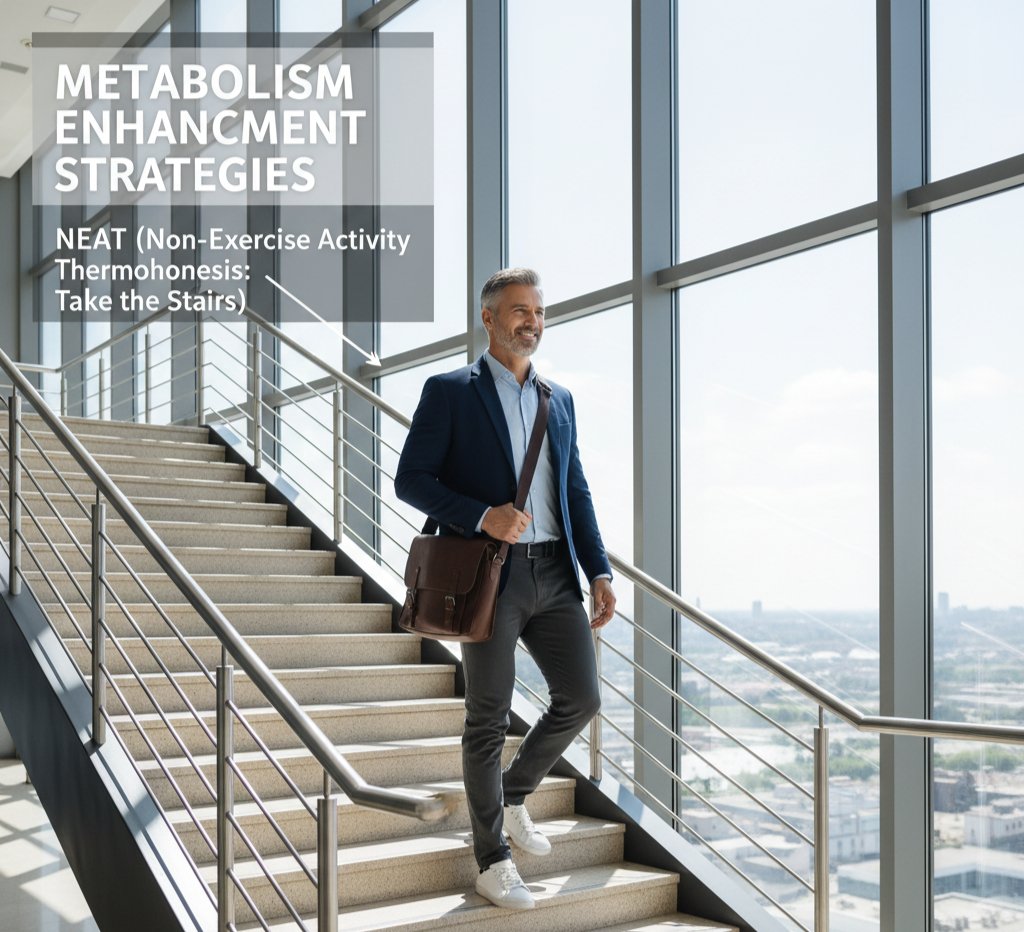
NEAT (Non-Exercise Activity Thermogenesis) Optimization
Your formal workouts represent only 3-5 hours weekly. The remaining 165+ hours determine your metabolic health and muscle-building success. Research shows that NEAT can account for 200-800 calories daily—more than most workout sessions.
NEAT Enhancement Strategies:
Daily Movement Targets:
- 8,000-12,000 steps daily (use stairs, park farther, walking meetings)
- Standing or walking during phone calls
- Hourly movement breaks during sedentary work
Environmental Modifications:
- Standing desk or treadmill desk options
- Take stairs instead of elevators
- Active commuting when possible (cycling, walking)
Recreational Activities:
- Weekend hikes or outdoor activities
- Recreational sports or group fitness
- Yard work, gardening, or active hobbies
Pro Tip: Set a hourly movement reminder on your phone. Even 2-3 minutes of walking or stretching every hour significantly improves metabolic health.
Strategic Cardio for Metabolic Health
Cardiovascular exercise serves different purposes after 40—primarily metabolic health and recovery enhancement rather than just calorie burning.
Optimal Cardio Distribution:
Low-Intensity Steady State (2-3x weekly):
- 20-40 minutes at conversational pace
- Walking, easy cycling, swimming
- Enhances recovery and fat oxidation
High-Intensity Intervals (1-2x weekly):
- 10-20 minutes total including rest periods
- Work:rest ratios of 1:2 or 1:3
- Improves insulin sensitivity and cardiovascular health
Daily Movement: 20-30 minutes of gentle activity on rest days
- Yoga, stretching, leisurely walks
- Promotes circulation and stress reduction
Intermittent Fasting Considerations for Muscle Preservation
Intermittent fasting can benefit metabolic health for men over 40, but muscle preservation requires careful implementation.
Muscle-Friendly IF Protocols:
16:8 Method (most sustainable):
- 8-hour eating window, 16-hour fast
- Example: Eat 12 PM – 8 PM, fast 8 PM – 12 PM
- Maintain protein targets within eating window
Alternate Day Approach (advanced):
- Normal eating alternated with reduced calorie days
- Maintain resistance training on normal eating days
- Higher protein intake on restricted days
Critical Considerations:
- Maintain total daily protein targets regardless of eating window
- Time workouts near the beginning of eating periods when possible
- Monitor strength and recovery—adjust approach if performance declines
Common Mistakes and How to Avoid Them
Overtraining in the Name of “Working Harder”
The fitness industry perpetuates the myth that intensity alone drives results. For men over 40, this approach consistently backfires due to reduced recovery capacity and elevated stress responses.
Signs of Overtraining:
- Declining performance despite consistent effort
- Persistent fatigue and mood changes
- Increased injury risk and joint pain
- Sleep disturbances and elevated resting heart rate
Solution: Implement planned deload weeks every 4-6 weeks, reduce training volume by 40-50% while maintaining intensity, and prioritize sleep and stress management equally with training.
Inadequate Recovery Between Sessions
Most men over 40 underestimate their recovery needs, leading to chronic underperformance and increased injury risk.
Recovery Indicators to Monitor:
- Sleep quality and duration
- Morning heart rate variability
- Motivation and energy levels
- Joint stiffness and muscle soreness
Recovery Enhancement:
- Minimum 48 hours between intense sessions for the same muscle groups
- Active recovery days with light movement and mobility work
- Stress management and relaxation practices
- Adequate protein and overall nutrition
Ignoring the Mind-Muscle Connection
After 40, training becomes more about precision than pure intensity. The mind-muscle connection becomes critical for both performance and injury prevention.
Implementation Strategies:
- Slow, controlled movements with focus on target muscles
- Visualization techniques during rest periods
- Reduced external distractions (music, phones) during key exercises
- Quality over quantity—perfect fewer reps rather than sloppy high volume
Common Mistake: Ego lifting with weights that prevent proper form and muscle activation. Your 40+ body responds better to challenging weights with perfect technique.
Putting It All Together: Your 12-Week Implementation Plan
Phase 1: Foundation Building (Weeks 1-4)
Primary Goals: Establish consistent habits, perfect movement patterns, and create sustainable routines.
Training Focus:
- 3x weekly full-body sessions
- Emphasis on movement quality and form
- Moderate intensity (6-8 RPE)
- 45-60 minute sessions including warm-up and cool-down
Nutrition Implementation:
- Establish protein targets and meal timing
- Begin tracking food intake for awareness
- Implement basic hydration goals (half body weight in ounces)
- Focus on whole food sources
Recovery Priorities:
- Establish consistent sleep schedule
- Begin daily mobility practice
- Implement stress management techniques
- Monitor energy and mood patterns
Success Metrics:
- Consistent training adherence (90%+ sessions completed)
- Daily protein targets met 80%+ of days
- Sleep quality improvements noted
- Movement pattern mastery in basic exercises
Phase 2: Progressive Overload (Weeks 5-8)
Primary Goals: Systematically increase training demands while maintaining excellent recovery.
Training Progression:
- Gradually increase weight (2.5-5 lbs every 2 weeks)
- Add training volume (additional set or exercise)
- Introduce more challenging exercise variations
- Maintain form standards despite increased intensity
Nutrition Refinement:
- Fine-tune meal timing around workouts
- Optimize pre/post-workout nutrition
- Address any deficiency areas (usually vegetables or healthy fats)
- Consider strategic supplementation if needed
Recovery Optimization:
- Refine sleep environment and routine
- Increase active recovery activities
- Monitor training response and adjust intensity accordingly
- Implement weekly assessment of progress and recovery
Success Metrics:
- Strength increases in major lifts (5-10% improvement)
- Body composition changes becoming visible
- Energy levels stable or improving
- Recovery between sessions adequate
Phase 3: Optimization and Assessment (Weeks 9-12)
Primary Goals: Peak performance, comprehensive assessment, and long-term planning.
Training Specialization:
- Focus on areas needing additional development
- Implement advanced techniques (tempo changes, pause reps)
- Address any movement limitations or imbalances
- Prepare for next training cycle
Nutrition Mastery:
- Achieve intuitive eating within healthy parameters
- Optimize body composition through fine-tuned nutrition timing
- Establish sustainable long-term eating patterns
- Assess supplement effectiveness and adjust accordingly
Lifestyle Integration:
- Fully integrate fitness into daily routine
- Establish systems for maintaining progress during busy periods
- Develop contingency plans for travel, stress, or schedule disruptions
- Create accountability systems for continued success
Comprehensive Assessment:
- Strength testing in major movement patterns
- Body composition analysis (photos, measurements, body fat)
- Energy, mood, and quality of life evaluation
- Long-term goal setting and program planning
Success Metrics:
- 15-25% strength increases from baseline
- Visible muscle gain and/or fat loss
- Improved energy and confidence levels
- Clear plan for continued progress
Your Next Steps: Building on This Foundation
Building muscle after 40 isn’t about fighting your physiology—it’s about working strategically with the body you have now. The men who see the best results combine the science-based protocols outlined here with patience, consistency, and intelligent adaptation.
Immediate Actions (This Week):
- Calculate your daily protein targets and plan 4 balanced meals
- Assess your current sleep quality and implement one improvement
- Schedule your first three training sessions using the foundation template
- Establish baseline measurements (weight, photos, key strength exercises)
30-Day Commitments:
- Consistent training schedule (3x weekly minimum)
- Daily protein and hydration targets
- Sleep optimization implementation
- Stress management practice establishment
Long-Term Success Factors:
- Regular program progression and variation
- Ongoing education about emerging research
- Community support and accountability systems
- Professional guidance when needed
Remember: your 40+ body is capable of remarkable changes when given the right inputs. The strategies outlined here aren’t just about building muscle—they’re about building a stronger, more energetic, more confident version of yourself that will serve you well for decades to come.
The question isn’t whether you can build muscle after 40. The question is: are you ready to implement the strategies that make it inevitable?
Primary Sources (6 authoritative citations):
- Journal of the American Medical Association (2023): “Protein Requirements for Muscle Maintenance in Middle-Aged Adults“
- Harvard Health Publishing (2024): “Exercise and Muscle Building After 40: What the Research Shows“
- National Institute on Aging: “Muscle Loss and Aging: Prevention Strategies“
- Sports Medicine Journal (2023): “Resistance Training Adaptations in Master Athletes“
- Mayo Clinic Proceedings (2024): “Metabolic Changes in Middle Age: Implications for Exercise“
- American Council on Exercise: “Evidence-Based Training for Adults Over 40“
Professional Consultation Notice: This content provides educational information only and should not replace professional medical, financial, or legal advice. Individual circumstances vary significantly. Consult qualified professionals for personalized guidance, especially if you have existing health conditions or are taking medications.